Key takeaways
- More than one in three American adults has prediabetes, and the large majority do not know it.
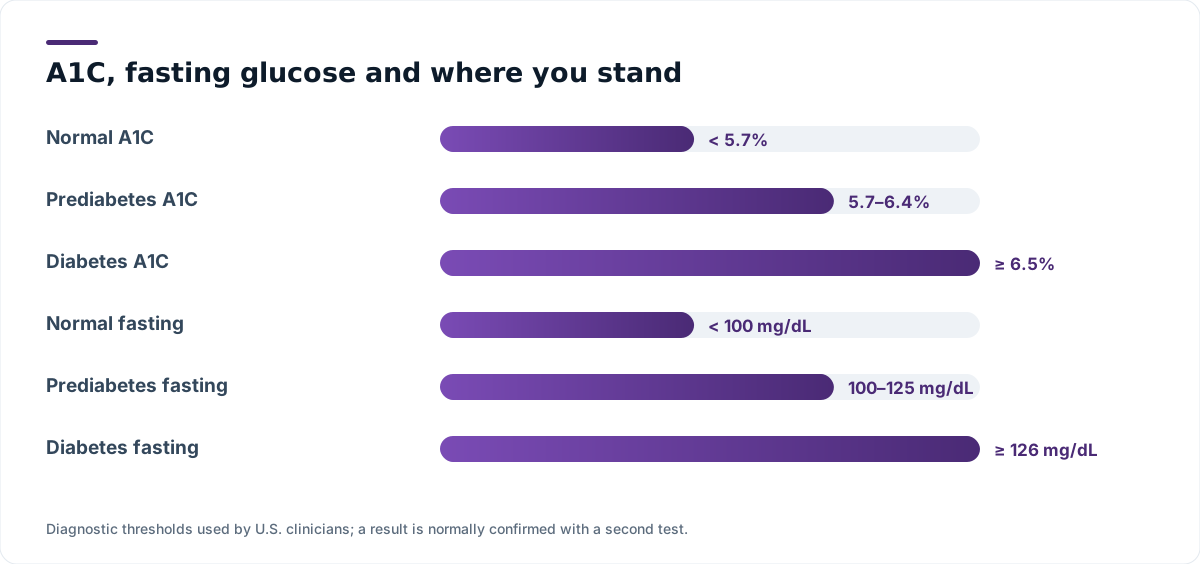
- An A1C of 5.7–6.4% or a fasting glucose of 100–125 mg/dL defines prediabetes; 6.5% or 126 mg/dL and above defines diabetes.
- Screening generally begins at 35 for adults with overweight or obesity, and earlier with additional risk factors.
- Structured lifestyle programs cut progression to type 2 diabetes by roughly half, and by more in older adults.
- Prediabetes is not a mild version of diabetes — it is a window, and the window closes.
Prediabetes is the largest silent health condition in the United States. National estimates put the number of affected adults at around 98 million — more than a third of the adult population — and roughly eight in ten of them have no idea. It produces no symptoms. It shows up on a blood test that costs very little and takes minutes. And unlike most conditions found by screening, it is frequently reversible.
What prediabetes actually is
Every cell in your body runs on glucose, and insulin is the hormone that lets glucose in. In insulin resistance, cells respond less readily to insulin, so the pancreas compensates by producing more of it. For years — often a decade or more — this works. Blood sugar stays near normal because insulin output keeps climbing.
Prediabetes is the stage where that compensation begins to fail. Blood glucose drifts above normal but has not yet reached the diabetic range. The beta cells of the pancreas are working overtime and gradually losing capacity. Damage to blood vessels, nerves and kidneys does not politely wait for the diabetic threshold; some of it begins during this window.
Left alone, a meaningful proportion of people with prediabetes progress to type 2 diabetes within five years. But progression is not inevitable, and that is the entire point of finding it.
The three tests that diagnose it
Hemoglobin A1C
Glucose in the blood attaches to hemoglobin inside red blood cells. Because those cells live roughly three months, the percentage of glycated hemoglobin reflects average blood sugar over about eight to twelve weeks. That is A1C's great strength: it is not thrown off by what you ate this morning, and no fasting is required.
Below 5.7% is normal. 5.7% to 6.4% is prediabetes. 6.5% or higher, confirmed, is diabetes.
A1C has limits. Anything that changes red blood cell lifespan distorts it — certain anaemias, recent blood loss or transfusion, chronic kidney disease, pregnancy, and some hemoglobin variants that are more common in people of African, Mediterranean and Southeast Asian ancestry. If your A1C and glucose readings disagree noticeably, this is usually why, and a fructosamine test or direct glucose measurement may be substituted.
Fasting plasma glucose
A blood draw after at least eight hours without food. Below 100 mg/dL is normal; 100–125 mg/dL is impaired fasting glucose, or prediabetes; 126 mg/dL or above, confirmed, is diabetes. It is cheap and widely available, but it captures a single moment and is sensitive to how truly fasted you were.
Oral glucose tolerance test
You fast, drink a standardized 75-gram glucose solution, and have blood drawn two hours later. Under 140 mg/dL is normal; 140–199 mg/dL is impaired glucose tolerance; 200 mg/dL or above is diabetes. It is the most sensitive of the three and catches people whose fasting numbers still look fine, but it takes two hours and tastes unpleasant, so it is used selectively — notably in pregnancy, where it is standard.
One abnormal test is not a diagnosis
Unless glucose is unmistakably high alongside classic symptoms, a diagnosis of diabetes requires two abnormal results — either two different tests, or the same test repeated. Ask for confirmation before accepting a label that will follow you through insurance forms for years.
Who should be screened
Current U.S. guidance recommends screening adults aged 35 to 70 who have overweight or obesity, repeating at least every three years if results are normal. Screening earlier or more often is appropriate for people with:
- A first-degree relative with type 2 diabetes
- A history of gestational diabetes, or a baby weighing over nine pounds at birth
- Polycystic ovary syndrome
- High blood pressure, or low HDL and high triglycerides on a lipid panel
- A prior abnormal glucose or A1C result
- Physical inactivity, or a history of cardiovascular disease
- Membership of a population group with higher observed incidence, including Black, Hispanic/Latino, American Indian, Alaska Native, Asian American and Pacific Islander Americans
The last point often surprises people: risk begins at a lower BMI in several Asian American populations, and screening thresholds are adjusted accordingly.
Why you cannot feel it
Classic diabetes symptoms — excessive thirst, frequent urination, unexplained weight loss, blurred vision, slow-healing wounds, recurrent infections, tingling in the feet — generally appear only once blood sugar has been substantially elevated for some time. Prediabetes produces none of them reliably. Some people notice fatigue after carbohydrate-heavy meals or darkened velvety skin in the neck folds and armpits, called acanthosis nigricans, which is a genuine clue. Most notice nothing at all.
Waiting to feel symptoms is not a screening strategy. By the time type 2 diabetes announces itself, the average person has had it for years.
What actually works to prevent progression
This is the rare area of preventive medicine with a large, well-designed American trial behind it. The Diabetes Prevention Program randomized adults with prediabetes to intensive lifestyle intervention, metformin, or placebo. The lifestyle arm — aiming at roughly 7% body weight loss and 150 minutes of moderate activity a week — reduced progression to type 2 diabetes by about 58% over roughly three years. In participants aged 60 and over, the reduction was around 71%. Metformin reduced progression by about 31%, with the greatest effect in younger participants and those with higher BMI.
Those results led to the National Diabetes Prevention Program, a CDC-recognized year-long structured program delivered in person and online across the country, often covered by insurance and by Medicare for eligible participants. If you are told you have prediabetes, asking about a recognized DPP program is one of the most concrete steps available.
The components that matter most
- Modest, sustained weight loss. Not dramatic loss. Five to seven percent, maintained, does most of the work.
- Movement, including resistance training. Muscle is the body's largest glucose sink. Walking after meals has a measurable effect on post-meal glucose.
- Carbohydrate quality over carbohydrate elimination. Whole grains, legumes, vegetables and fruit behave very differently from refined starch and sugar-sweetened drinks. Sugary beverages are the single easiest high-yield target.
- Sleep. Short and fragmented sleep worsens insulin sensitivity within days in controlled studies. Untreated sleep apnoea is common in this population.
- Stopping smoking. Smoking independently increases insulin resistance.
What about continuous glucose monitors?
CGMs are now available over the counter in the United States and are popular with people who do not have diabetes. They can be genuinely motivating and can reveal individual food responses. They are not, however, a diagnostic test for prediabetes, and glucose excursions in people without diabetes are normal and easily over-interpreted. Treat a CGM as a behavioural tool, not a verdict.
If your result comes back in the prediabetes range
- Confirm and record the exact number. An A1C of 5.8% and one of 6.4% are different situations.
- Get the rest of the metabolic picture. Blood pressure, lipids, liver enzymes and waist circumference commonly move together. Fatty liver disease frequently accompanies insulin resistance.
- Ask about a recognized prevention program. Structured beats improvised for most people.
- Ask whether metformin is appropriate. It is often considered for people under 60 with BMI 35 or above, or with a history of gestational diabetes.
- Recheck in a year. Prediabetes warrants annual testing, not testing every three years.
The bottom line
Prediabetes is the clearest example in adult medicine of a condition where a cheap test, taken at the right time, gives you years of warning and a genuine chance to change the outcome. The test itself is trivial. The hard part is being told to take it — and then acting on what it says.